
SRS On CNN
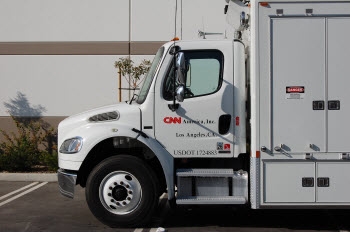
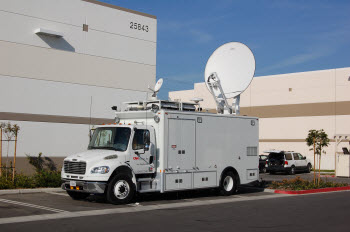
On March 18, 2009, CNN visited SRS International in Murrieta, California, to produce a live simulcast focusing on job creation “SRS on CNN” in the biodiesel industry amid challenging economic conditions. This segment highlighted the innovative efforts and contributions of SRS on CNN in the growing biodiesel sector, showcasing how the company was not only adapting to the economic downturn but also actively contributing to sustainable energy solutions and employment opportunities.
During the broadcast, viewers saw firsthand the dedication and expertise of the SRS team, as well as the importance of the biodiesel industry in fostering economic resilience and environmental sustainability. The coverage underscored the potential of renewable energy sectors to drive job growth and technological advancements, even in difficult times.
This feature on CNN provided significant exposure for SRS International, allowing them to share their mission and successes with a broader audience. It served as a testament to the vital role that renewable energy companies play in shaping a sustainable future while supporting local economies.
For those interested in watching this impactful segment, click the link below to view SRS’s feature on CNN. This opportunity not only highlighted SRS’s achievements but also reinforced the message that innovation in renewable energy is crucial for both economic recovery and environmental stewardship.
Help Wanted in Biodiesel Industry
By spotlighting these developments, CNN helped bring attention to the importance of supporting green industries in today’s economy.

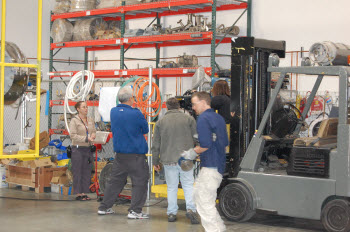
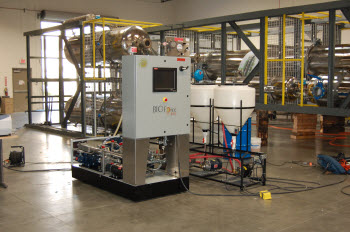
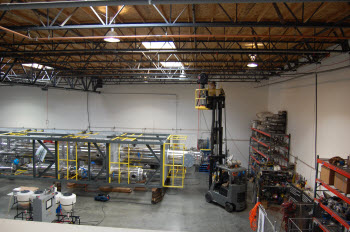
Photos of March 18th CNN Visit:

Overview of Convolutional Neural Networks (CNNs)
Convolutional Neural Networks (CNNs) are a specialized type of artificial neural network designed to process data with a grid-like topology, such as images. They are particularly effective for image recognition and classification tasks due to their ability to capture spatial hierarchies in visual data.
Historical Context
SRS on CNNs gained popularity in the late 1980s and early 1990s, notably through the work of Yann LeCun, who developed the LeNet architecture for digit recognition. However, it wasn’t until the advent of more powerful computational resources and large datasets that CNNs truly revolutionized fields such as computer vision.
Architecture of CNNs
The architecture of a CNN typically consists of several layers that perform different types of operations:
- Input Layer: The raw pixel values of an image are fed into the network. For color images, the input may have three channels (RGB).
- Convolutional Layers: These layers apply convolution operations to the input data. A convolution operation involves a filter (or kernel) sliding across the input image and performing element-wise multiplication followed by summation. This process helps detect features such as edges, textures, and shapes. Each filter captures different patterns, which allows the network to learn hierarchical representations.
- Activation Function: After each convolution operation, an activation function (commonly ReLU, or Rectified Linear Unit) is applied to introduce non-linearity into the model. This is crucial as it enables the network to learn complex mappings from inputs to outputs.
- Pooling Layers: Following convolutional layers, pooling layers reduce the spatial dimensions of the feature maps. Max pooling, which takes the maximum value from a subset of the feature map, is commonly used. Pooling helps to down-sample the feature maps and reduces computational load, while also providing a form of translation invariance.
- Fully Connected Layers: After several convolutional and pooling layers, the final feature maps are flattened into a one-dimensional vector and passed through fully connected layers. These layers are similar to those in traditional neural networks and are responsible for making final predictions based on the extracted features.
- Output Layer: The final layer usually employs a softmax activation function for multi-class classification problems, producing probabilities for each class.
Training CNNs
Training a CNN involves adjusting its weights using a labeled dataset. The most common optimization algorithm used is stochastic gradient descent (SGD) with backpropagation. The loss function (often categorical cross-entropy for classification tasks) measures the difference between the predicted output and the actual labels, guiding the weight adjustments.
To improve generalization and prevent overfitting, techniques such as dropout, data augmentation, and regularization are often employed.
Applications of SRS on CNNs
CNNs have a wide range of applications beyond image classification, including:
- Object Detection: CNNs can identify and locate objects within an image. Architectures like YOLO (You Only Look Once) and Faster R-CNN are prominent in this domain.
- Image Segmentation: This involves partitioning an image into meaningful segments. U-Net and Mask R-CNN are popular architectures for this task, particularly in medical imaging.
- Facial Recognition: CNNs are extensively used for identifying and verifying individuals in images or videos, leveraging their ability to learn facial features effectively.
- Natural Language Processing: While traditionally dominated by recurrent neural networks (RNNs), CNNs have also been adapted for text classification and sentiment analysis, treating text as a 1D image.
- Video Analysis: CNNs can analyze video frames for tasks like action recognition and scene understanding.
- Medical Diagnosis: In healthcare, CNNs assist in diagnosing diseases by analyzing medical images like X-rays, MRIs, and CT scans.
Advantages of CNNs
- Automatic Feature Extraction: Unlike traditional methods that require manual feature extraction, CNNs automatically learn features from raw data, making them highly efficient.
- Parameter Sharing: The use of convolutional filters allows for parameter sharing, reducing the number of parameters compared to fully connected networks and making them less prone to overfitting.
- Translation Invariance: Pooling layers contribute to the network’s ability to recognize objects in varying positions within the image.
Challenges and Limitations
Despite their strengths, CNNs also face challenges:
- Data Requirements: CNNs often require large amounts of labeled data to train effectively, which can be a barrier in domains where data collection is expensive or impractical.
- Computationally Intensive: Training CNNs can be resource-intensive, necessitating powerful GPUs and significant time for training on large datasets.
- Black Box Nature: Understanding how CNNs make decisions can be difficult, leading to challenges in interpretability, particularly in critical applications like healthcare.
Future Directions
The field of CNNs is rapidly evolving, with ongoing research focused on improving efficiency and accuracy. Some trends include:
- Lightweight Architectures: Designing more efficient models, such as Mobile Nets and Squeeze Net, that can run on mobile devices without sacrificing performance.
- Transfer Learning: Utilizing pre-trained models on large datasets and fine-tuning them for specific tasks, making CNNs accessible even with limited data.
- Generative Models: Exploring the intersection of CNNs with generative models like GANs (Generative Adversarial Networks) for tasks such as image synthesis and style transfer.
Conclusion
Convolutional Neural Networks have fundamentally transformed the landscape of machine learning, particularly in the realm of image processing. Their ability to automatically learn and extract features from data has led to groundbreaking advancements across various applications. As research continues to push the boundaries of what CNNs can achieve, their impact on technology and society is likely to grow even further.
This overview captures the essence of CNNs, their architecture, applications, and significance. If you need more specific sections or further details, feel free to ask!