
Degumming and Bleaching

Introduction to Degumming
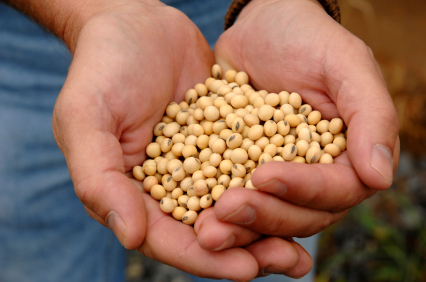
Soybeans provide our primary source of edible oil and protein. They also serve as the only commercial source of lecithin. Processors produce about 200,000 tons of lecithin each year as a by-product of soybean processing. Manufacturers use lecithin in various food and industrial products.
To remove from crude oil, processors add water, acids, enzymes, or apply caustic neutralization. This causes gums to precipitate from the oil. They then recover the gums through centrifugation or sedimentation. Some processors skip this step and refine crude oil directly by removing gums with soap stock.
Soybean phosphatides represent valuable by-products. Processors must remove them to make the oil suitable for products such as salad oils, margarines, or shortening.
Degumming
Phospholipids (PLs) occur naturally in oils and oilseeds. However, they cause problems because they settle out during shipping and storage, darken the oil’s color, and alter its flavor. In addition, PLs create processing difficulties and reduce quality in food applications such as frying.
Degumming removes these PLs from the oil and therefore plays an essential role in producing high-quality refined oil. Phospholipids exist in two main forms: hydratable and nonhydratable. Crude vegetable oils usually contain about 10% nonhydratable PLs, although this percentage varies depending on seed quality, seed type, and milling conditions.
Water degumming eliminates most hydratable PLs. Processors use acid degumming or enzymatic degumming to remove nonhydratable PLs.
Water Degumming
Processors remove hydratable phospholipids (PLs) through water-degumming. They generally add 2% hot water at 160–176°F to the oil and mix it for 10–15 minutes. During this process, the PLs absorb water, lose their lipophilic properties, and agglomerate into a gum phase. Centrifugation then separates the gums from the oil. Processors return these gums to the meal or further process them to produce lecithin, which acts as an emulsifier in food and feed products. After water-degumming, the oil retains a residual phosphorus level of about 100 parts per million.
Acid Degumming
Acid degumming is suitable for pretreating oils like palm, palm kernel, coconut, and olive oils, as well as animal fats. This method significantly reduces the consumption of bleaching earth during physical refining, improving the overall process economy. Initially, we heat the crude oil to the optimal temperature. Next, we add phosphoric or citric acid using a metering unit, thoroughly mixing it in a centrifugal mixer. After a brief reaction, we add hot water to mix. The heavy phase, containing phosphatides, proteins, pigments, and other impurities, is then separated. The treated oil is subsequently sent directly to the bleaching stage and deacidified via distillation.
Benefits of Acid Degumming:
- Reduces bleaching earth consumption
- Improves end-product quality
- Minimizes fouling of downstream equipment
Chemical Refining
Crude oils typically contain 1-3% Free Fatty Acids (FFAs), while high-quality oils contain less than 0.5%. Long-chain FFAs do not significantly affect taste; however, short-chain FFAs can give oils a rancid or soapy flavor. Soap stock is separated from refined oil by gravity settling, filtration, or centrifugation. Additionally, FFAs accelerate oxidation, reducing oil stability. Chemical refining removes FFAs and forms a heavy soap stock, composed of sodium or potassium salts of fatty acids.
Physical Refining
Physical refining, also known as deacidification by steam distillation, distills off FFAs and other volatile compounds from the oil. This process provides a viable alternative to caustic refining, relying on the higher volatility of FFAs compared to triacylglycerols (TAGs) at high temperatures and low pressures. Consequently, physical refining can reduce FFA content in the refined oil to as low as 0.005%.
Phospholipid (Pls) content of different oils and fats
| Type of Oil | P-Content (ppm) | Phospholipids (Pls) % |
| Coconut | 10 – 20 | 0.025 – 0.05 |
| Palm | 15 – 40 | 0.04 – 0.01 |
| Sunflower | 200 – 500 | 0.05 – 1.3 |
| Maiz germ (corn) | 300 – 800 | 0.7 – 2.0 |
| Rapeseed | 200 – 800 | 0.5 – 2.0 |
| Cottonseed | 400 – 1000 | 1.0 – 2.5 |
| Soyabean | 600 – 1200 | 1.5 – 3.0 |
BLEACHING
The primary purpose of the bleaching process is to ensure that all color bodies have been successfully
Bleaching Process
The main goal of the bleaching process is to remove color bodies through adsorption, achieving the desired color in your finished product. In conventional refining, bleaching also eliminates trace impurities that could negatively impact downstream stability and processing.
Key Features of the Bleaching Process:
- Accurate and convenient metering of oil and bleaching earth.
- Continuous, perfect dispersion of bleaching earth in the oil, ensuring all earth particles come into intimate contact with the processed oil under optimum vacuum (55 torr) and temperature (90-100°C).
- Uniform holding time of the oil-earth mixture in the bleacher for 30 minutes.
- Filtration of the oil in hermetic leaf filters with stainless steel frames and cloths, which require minimal maintenance.
Process Flow:
- Oil Transfer and Mixing: The degummed oil is transferred to an oil-earth mixer, where bleaching earth is added, and the mixture is thoroughly blended.
- Heating the Oil: The oil then moves to the oil heater, where it is heated to the desired temperature under vacuum pressure.
- Continuous Bleaching: Next, the mixture enters the continuous bleacher, where it undergoes intense agitation. The system maintains a constant level to avoid short-circuiting and ensure uniform bleaching. This process guarantees optimal de-aeration of both the oil and the earth, as well as intimate mixing of the adsorbent with the oil.
- Filtration: The oil-earth mixture is pumped to filters. The two filters operate alternately. Once filtered, the oil is kept under vacuum in a receiver to prevent oxidation. It is then passed through a security filter to eliminate any remaining traces of impurities.
- Cake Disposal: After filtration, the spent cake is discharged and disposed of using pneumatic vibrators.
Advantages of the System:
- Labor and Space Savings: The system reduces labor and floor space requirements.
- Precise Metering: Accurate metering of oil and earth ensures the oil reaches the desired color.
- Efficient Dispersion: Continuous, perfect dispersion of the bleaching earth guarantees maximum contact with the oil, achieving optimal conditions under vacuum (55 torr) and temperature (90-100°C).
- Uniform Holding Time: The oil-earth mixture stays in the bleacher for 30 minutes to ensure consistent results.
- Minimal Maintenance: Oil filtration occurs in hermetic leaf filters with stainless steel frames and cloths, which require minimal upkeep.
- Vacuum Protection: The filtered oil remains under vacuum throughout the process to avoid oxidation.
- Maintenance-Free Bleacher: The bleacher operates without mechanical agitators, reducing maintenance needs.
- Low Oil Content in Spent Cakes: The oil content in spent cakes is limited to 24%. The oil can be recovered through various methods.
- Increased Efficiency: Injecting live steam into the oil enhances the bleaching efficiency of the activated earth.
By following this refined process, you ensure high-quality oil with consistent color and purity while optimizing your operational efficiency.
For more information on the degumming process, call one of our biodiesel specialists today at (800)497-5841 or email us at sales@srsintl.com
Also check out, “Cold Refining“