Key Differences in Batch Distillation
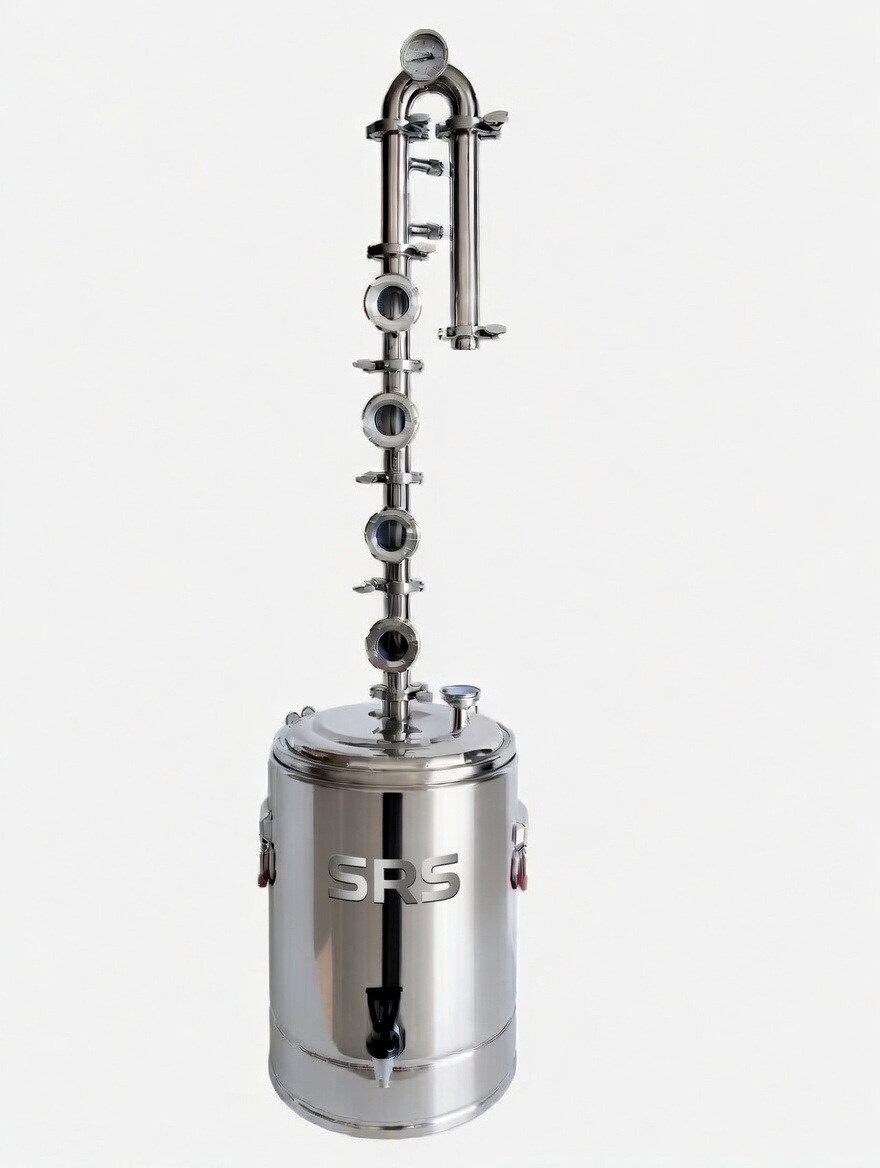
A Batch Rectifier is a distillation column designed to produce high-purity distillate. The feed is charged into the still, heated, and the vapor is fractionated in the column. Multiple fractions can be collected at different purities. It is ideal when high purity of the top product is required.
A Batch Stripper focuses on removing volatile components from the bottom product. The feed is introduced at the top of the column, and vapor rises to strip out lighter components. It is commonly used when the bottom product (residue) needs purification or when recovering heavy products.
| Parameter | Batch Rectifier | Batch Stripper |
|---|---|---|
| Primary Goal | High-purity top product (Distillate) | High-purity bottom product (Residue) |
| Feed Location | Bottom (Reboiler) | Top of the column |
| Main Product | Overhead Distillate | Bottoms (Residue) |
| Typical Use | Purification of volatile components | Removal of volatile impurities |
| Energy Efficiency | Moderate to High | Usually Lower |

A Batch Rectifier is a specialized distillation system designed to separate liquid mixtures into high-purity components in batch mode. It consists of a heated still (reboiler) at the bottom, a fractionation column with trays or packing, a condenser at the top, and receivers for collecting different fractions.The process begins by charging the entire batch of feed into the still. Heat is applied to generate vapor, which rises through the column. As the vapor travels upward, it repeatedly condenses and re-vaporizes on each stage, creating multiple vapor-liquid equilibrium stages. This allows lighter, more volatile components to enrich at the top, producing a high-purity distillate, while heavier components remain in the still.Batch rectifiers are highly flexible and ideal for producing multiple fractions from a single batch. They are widely used in pharmaceutical manufacturing, specialty chemicals, essential oils, solvent recovery, and research laboratories. Key advantages include excellent control over product purity, the ability to handle varying feed compositions, and suitability for small to medium production volumes. Modern systems often feature vacuum operation, automated controls, and heat integration to enhance efficiency and reduce energy consumption.
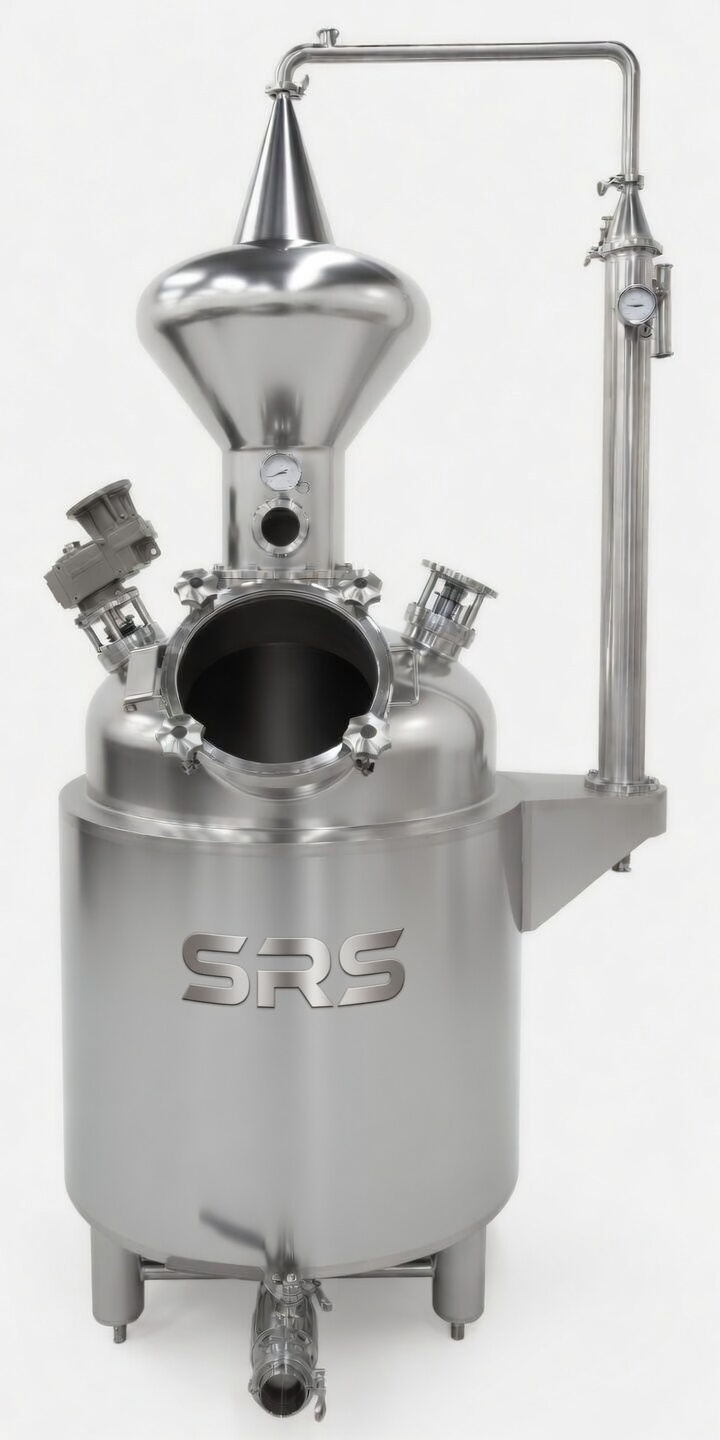
A Batch Stripper is a type of distillation column designed primarily to remove volatile components (lights) from a liquid mixture, producing a purified bottom product (residue). Unlike a batch rectifier, the feed is introduced at the top of the column, and steam or heat is applied from the bottom reboiler. As vapor rises, it strips out the more volatile impurities from the descending liquid.The process works by counter-current contact between rising vapor and falling liquid across trays or packing. Lighter components are carried upward with the vapor and collected as overhead distillate, while the heavier, less volatile components are concentrated in the bottoms. Batch strippers are especially effective when the goal is to purify the bottom product or remove small amounts of volatile impurities.They are commonly used in industries such as pharmaceuticals, specialty chemicals, wastewater treatment, and solvent recovery. Key advantages include simplicity of operation, suitability for heat-sensitive materials, and excellent performance when only a small fraction of volatiles needs removal. Batch strippers offer good flexibility for varying batch sizes and feed compositions. Modern systems often incorporate vacuum operation, advanced temperature control, and energy-efficient designs to minimize thermal degradation and operating costs.
Technical Comparison
| Parameter | Batch Rectifier | Batch Stripper |
|---|---|---|
| Primary Objective | High-purity distillate (Top Product) | Purified bottoms / Residue |
| Feed Location | Bottom (Reboiler) | Top of Column |
| Main Product | Overhead Distillate | Bottoms Product |
| Column Operation | Rectification (Enrichment) | Stripping (Depletion of volatiles) |
| Typical Use | Purification of volatile components | Removal of volatile impurities |
| Flexibility | High (Multiple fractions) | Moderate |
Efficiency Comparison
| Parameter | Batch Rectifier | Batch Stripper |
|---|---|---|
| Typical Separation Efficiency | 92 – 99% | 85 – 95% |
| Purity of Main Product | Very High (Top Product) | High (Bottoms Product) |
| Energy Efficiency | Moderate to High | Usually Better |
| Flexibility for Multiple Fractions | Excellent | Moderate |
| Best For | High-purity top product | Removing volatile impurities |
Note: Batch Rectifiers generally achieve higher top-product purity, while Batch Strippers are more energy-efficient when purifying the residue.
Typical Applications
| Industry / Process | Batch Rectifier | Batch Stripper |
|---|---|---|
| Pharmaceuticals | Solvent purification, API concentration | Removal of volatile impurities |
| Specialty Chemicals | High-purity solvent recovery | Stripping of light ends |
| Essential Oils & Fragrances | Fractional distillation of oils | Removal of terpenes |
| Ethanol / Alcohol Production | Rectification for high-purity ethanol | Dealcoholization of liquids |
| Wastewater Treatment | Solvent recovery from waste | Volatile organic compound (VOC) stripping |
| Solvent Recovery | High-purity solvent distillation | Removal of light contaminants |
| Question | Answer |
|---|---|
| What is the main difference between a Batch Rectifier and a Batch Stripper? | A Batch Rectifier aims for high-purity top product (distillate), while a Batch Stripper focuses on purifying the bottom product by removing volatile impurities. |
| Where is the feed introduced in each system? | In a Batch Rectifier, feed is charged into the bottom still. In a Batch Stripper, feed is introduced at the top of the column. |
| Which is better for high-purity distillate? | Batch Rectifier – it is specifically designed for enriching and purifying the overhead product. |
| When should I use a Batch Stripper? | When the goal is to remove light volatile impurities or purify the heavy bottom residue. |
| Which one is more energy efficient? | Batch Stripper usually consumes less energy when only small amounts of volatiles need removal. |
| Can both systems produce multiple fractions? | Yes, but Batch Rectifiers are more flexible for collecting multiple high-purity fractions sequentially. |