
Degumming

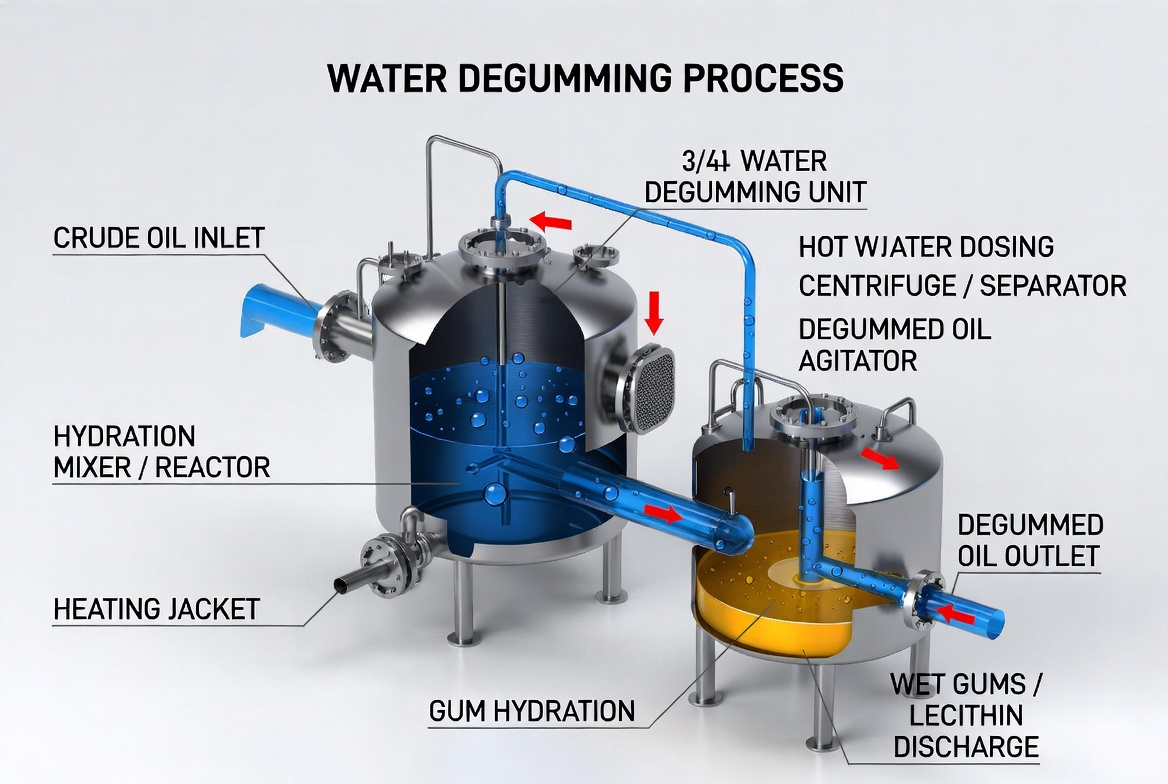
water degumming

Water Degumming is the simplest and most traditional method of removing phospholipids (gums) from crude vegetable oils. It involves mixing the oil with hot water or steam to hydrate the gums, which are then separated by centrifugation. This process effectively removes hydratable phospholipids and produces valuable lecithin as a byproduct. It is commonly used for low-phosphorus oils such as sunflower and palm oil.
Acid Degumming

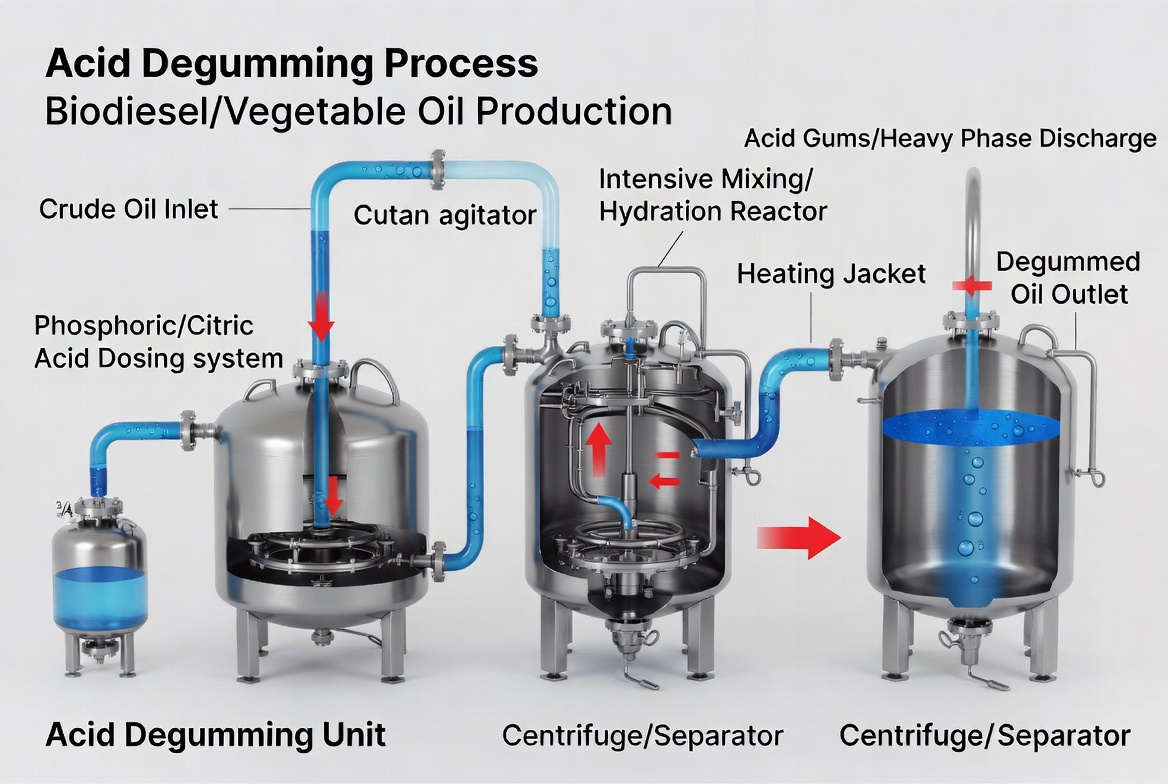
acid degumming

Acid Degumming is an advanced refining process that uses phosphoric or citric acid to remove both hydratable and non-hydratable phospholipids from crude oils. The acid converts non-hydratable gums into a removable form, achieving higher phosphorus reduction than water degumming. It is widely used for high-phosphorus oils like soybean and rapeseed, preparing them effectively for further refining stages.
Enzymatic Degumming

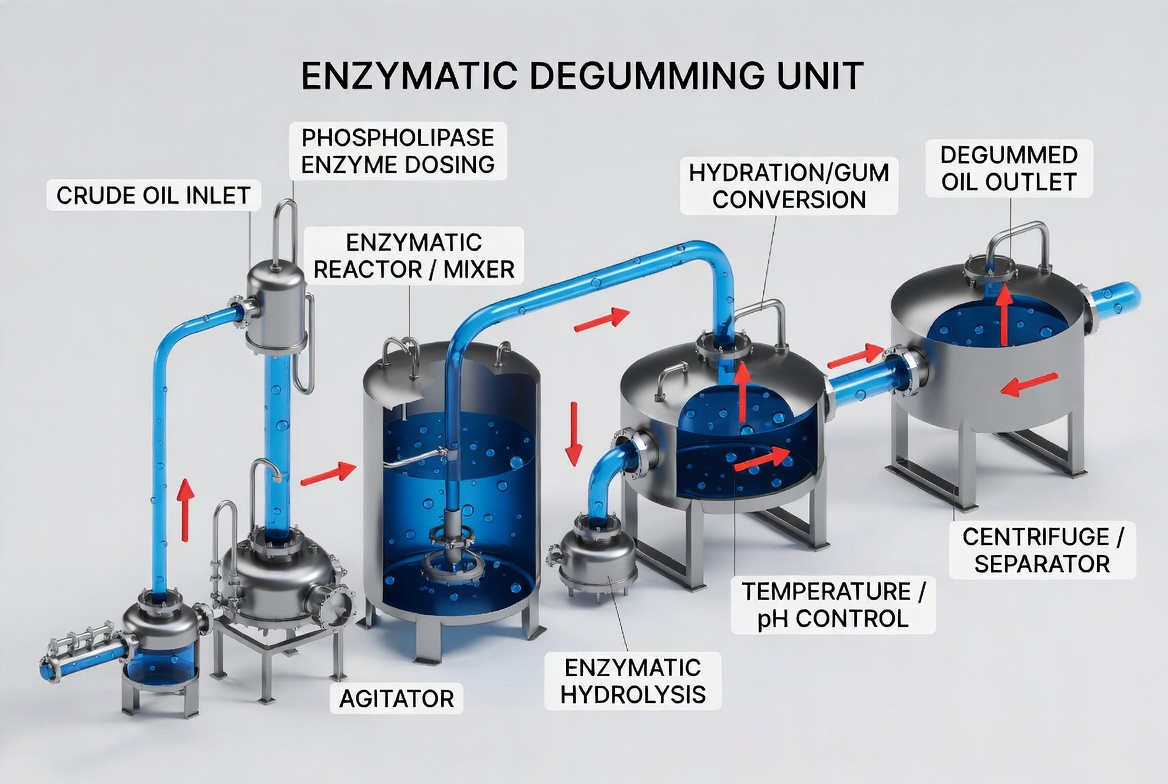
enzymatic degumming

Enzymatic Degumming is a modern, highly efficient process that uses phospholipase enzymes to break down phospholipids in crude vegetable oils. It achieves ultra-low phosphorus levels with minimal chemicals and lower temperatures. This eco-friendly method delivers superior lecithin quality and higher oil yield, making it ideal for premium edible oils and high-value biodiesel feedstocks.


Critical First Step in Vegetable Oil & Biodiesel Feedstock Refining

Degumming is the initial purification stage in vegetable oil refining and biodiesel feedstock preparation. It involves the removal of phospholipids (gums), proteins, and other water-soluble impurities from crude oils such as soybean, canola, sunflower, palm, and used cooking oil.

Why Degumming is Essential

Benefit Description
Prevents Equipment Fouling Removes sticky gums that can clog pipes, heat exchangers, and filters
Improves Oil Stability Reduces oxidation risk and extends shelf life
Enhances Downstream Efficiency Prepares oil for effective neutralization, bleaching, and deodorization
Increases Profitability Allows recovery of valuable lecithin as a byproduct

Types of Degumming Processes

Type Method Best For
Water Degumming Hydration of phospholipids using hot water or steam Low-phosphorus crude oils
Acid Degumming Treatment with phosphoric or citric acid High-phosphorus oils (soybean, rapeseed)
Enzymatic Degumming Use of phospholipase enzymes Ultra-low phosphorus levels & eco-friendly refining

The degumming process is the foundation of high-quality oil refining and biodiesel production. Effective degumming not only protects downstream equipment but also significantly improves yield, stability, and the overall quality of the final product.

Need More Help ? Contact Us