| Parameter | Lab Scale | Pilot Scale |
|---|---|---|
| Capacity | 1 – 20 Liters | 50 – 500 Liters |
| Column Diameter | 25 – 80 mm | 150 – 500 mm |
| Operating Pressure | Full Vacuum to 2 bar | Full Vacuum to 3 bar |
| Temperature Range | -20°C to +250°C | -20°C to +300°C |
| Material of Construction | Borosilicate Glass / SS 316 | SS 316 / Hastelloy / Glass Lined |
| Typical Use | R&D, Process Development | Scale-up Studies, Pilot Production |
| Control System | Manual / Semi-Automatic | Fully Automated with PLC / SCADA |

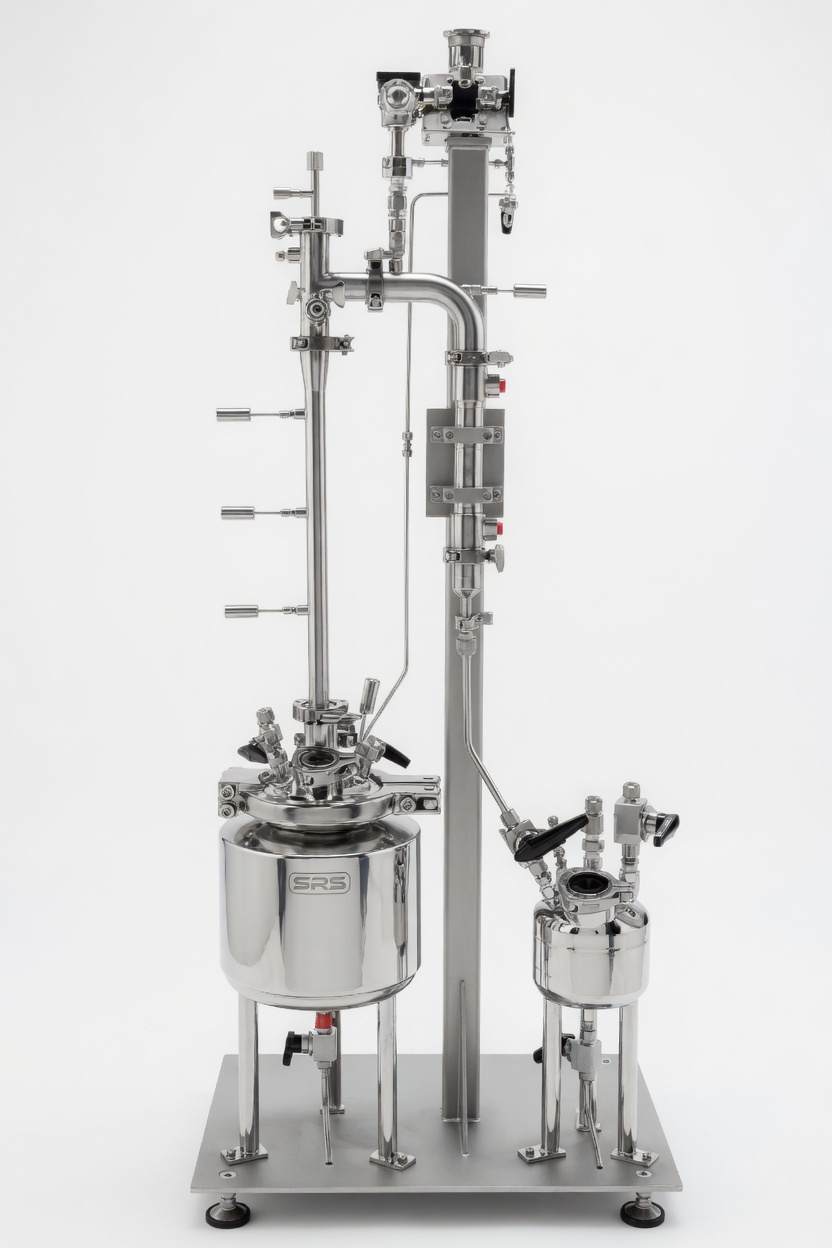
Lab Scale Distillation is a small-scale distillation process used in research laboratories, educational institutions, and pilot plants to separate, purify, and analyze liquid mixtures. Unlike industrial systems, lab scale units are compact, flexible, and designed for handling small volumes ranging from a few milliliters to several liters.These systems typically consist of a round-bottom flask (still), a fractionation column (Vigreux, packed, or spinning band), a condenser, and one or more receivers. They can operate under atmospheric pressure or vacuum to handle heat-sensitive compounds. Common configurations include simple distillation, fractional distillation, and vacuum distillation setups.Lab scale distillation is essential for purifying solvents, isolating active pharmaceutical ingredients, developing new chemical processes, and performing quality control analysis. It allows researchers to quickly test different parameters such as temperature, reflux ratio, and column efficiency with minimal material consumption.Key advantages include precise temperature control, easy observation of the process, rapid setup and cleaning, and the ability to collect multiple fractions. Modern lab scale distillation units often feature digital temperature controllers, automated reflux dividers, and data logging capabilities. They serve as critical tools for process development, scale-up studies, and training the next generation of chemists and chemical engineers.
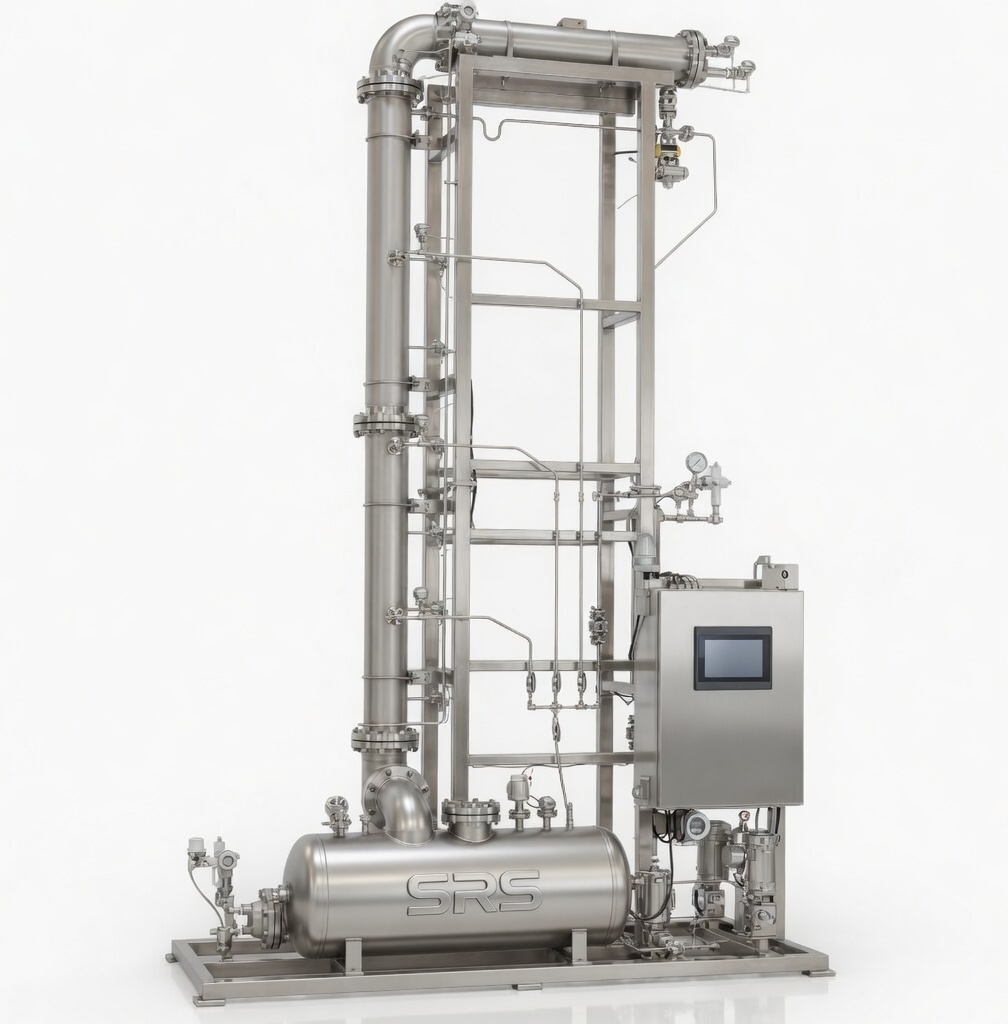
Pilot Scale Distillation refers to medium-sized distillation systems that bridge the gap between laboratory experiments and full-scale industrial production. These units typically handle feed volumes from 10 liters to several thousand liters per batch or continuously, making them essential for process development, scale-up studies, and small commercial production.Pilot scale distillation columns are designed with features similar to industrial units, including structured or random packing, multi-stage trays, precise reflux control, vacuum capability, and advanced instrumentation for temperature, pressure, and flow monitoring. They allow engineers to validate process parameters, optimize operating conditions, and generate reliable data for commercial plant design.These systems are widely used in pharmaceutical process development, specialty chemical manufacturing, biofuel research, essential oil production, and petrochemical testing. Key advantages include the ability to produce representative product samples, evaluate long-term operational stability, identify potential scale-up issues, and generate data for regulatory submissions and economic analysis.Pilot scale distillation provides a cost-effective and low-risk way to de-risk new processes before committing to large capital investments. Modern pilot units often incorporate automation, data logging, and modular designs for maximum flexibility across different separation challenges.
| Lab Scale Distillation | Pilot Scale Distillation | |
|---|---|---|
| Capacity | 100 mL – 20 Liters | 50 – 5000+ Liters |
| Purpose | Research, Analysis & Development | Process Validation & Scale-up |
| Operation Mode | Primarily Batch | Batch or Continuous |
| Column Diameter | 10 – 50 mm | 100 – 800 mm |
| Automation Level | Manual to Semi-Automatic | Fully Automated with PLC/SCADA |
| Cost | Low to Moderate | Moderate to High |
| Typical Use | R&D Labs, Universities, Method Development | Pilot Plants, Process Optimization, Commercial Scale-up |
| Efficiency Parameter | Lab Scale | Pilot Scale |
|---|---|---|
| Thermal Efficiency | 65 – 75% | 82 – 90% |
| Separation Efficiency | 75 – 85% | 90 – 96% |
| Energy Efficiency (per liter) | Lower | Much Higher |
| Product Yield | 70 – 82% | 88 – 95% |
| Overall Process Efficiency | Good for R&D | Excellent for Scale-up |
Conclusion: Pilot Scale Distillation offers significantly higher efficiency, better yield, and more reliable data for commercial scale-up.
| Application Area | Lab Scale Distillation | Pilot Scale Distillation |
|---|---|---|
| Research & Development | Method development, small sample testing | Process optimization & scale-up studies |
| Pharmaceuticals | API synthesis, impurity profiling | Process validation, clinical trial material |
| Specialty Chemicals | New molecule synthesis & purification | Process demonstration & economic evaluation |
| Essential Oils & Fragrances | Small batch extraction & fractionation | Commercial recipe development |
| Biofuels & Ethanol | Research on new separation techniques | Pilot production & yield optimization |
| Educational / Training | University labs & student training | Advanced industrial demonstration |
| Question | Answer |
|---|---|
| What is the main purpose of Lab Scale Distillation? | Primarily for research, method development, small sample testing, and educational purposes with very small volumes. |
| What is the main purpose of Pilot Scale Distillation? | Process optimization, scale-up validation, generating data for commercial design, and producing larger test batches. |
| Which one offers better efficiency? | Pilot Scale is significantly more efficient in energy use, yield, and separation performance due to better design and control. |
| Can Lab Scale data be directly scaled up? | Not always. Pilot Scale is used to validate and bridge the gap between lab results and full industrial production. |
| Which is more expensive? | Pilot Scale systems are much more expensive due to larger size, automation, and engineering requirements. |
| When should I choose Pilot Scale over Lab Scale? | When you need reliable scale-up data, process validation, or larger product quantities for testing or commercial evaluation. |